 Image 1 of 5
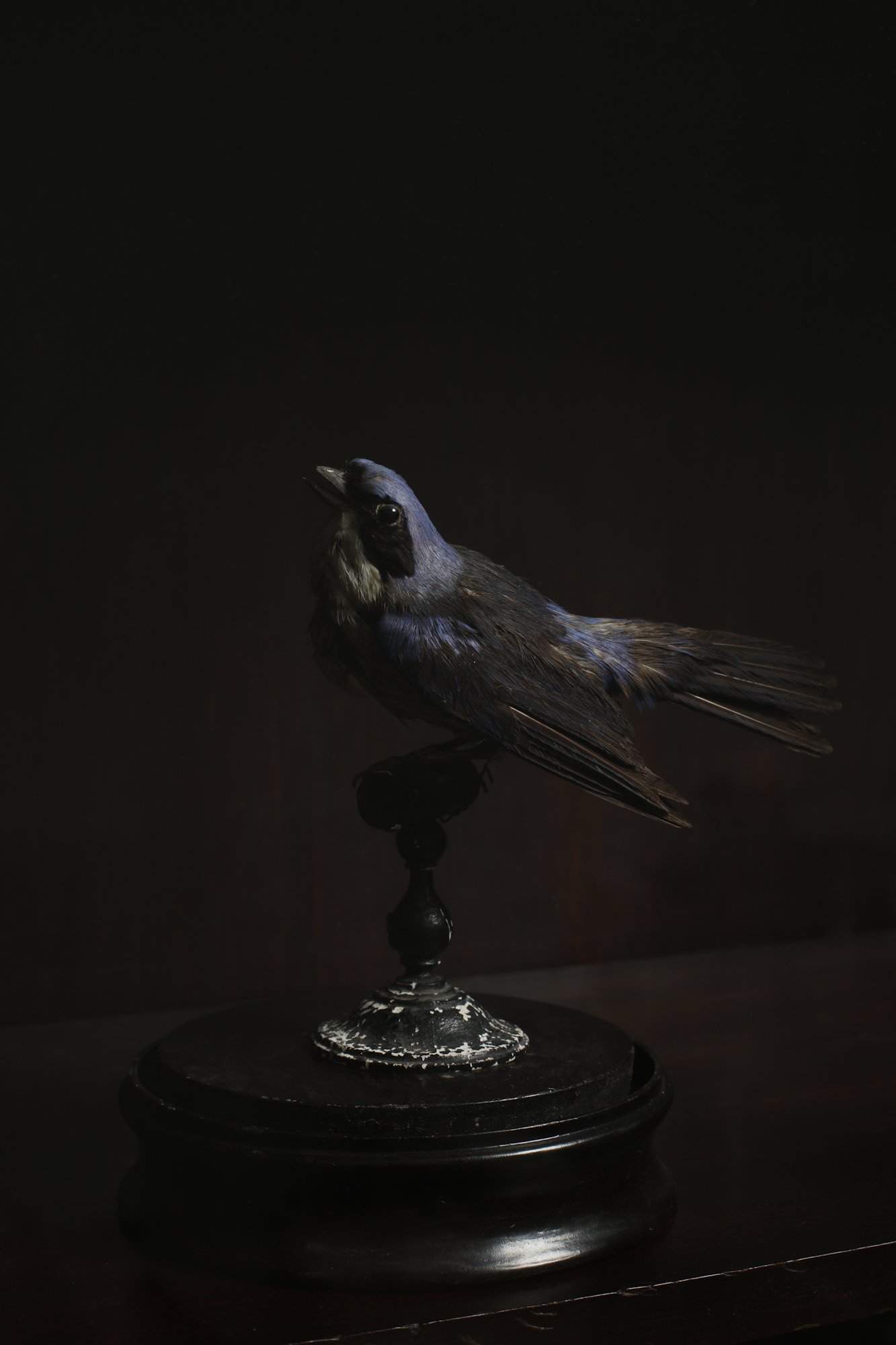 Image 2 of 5
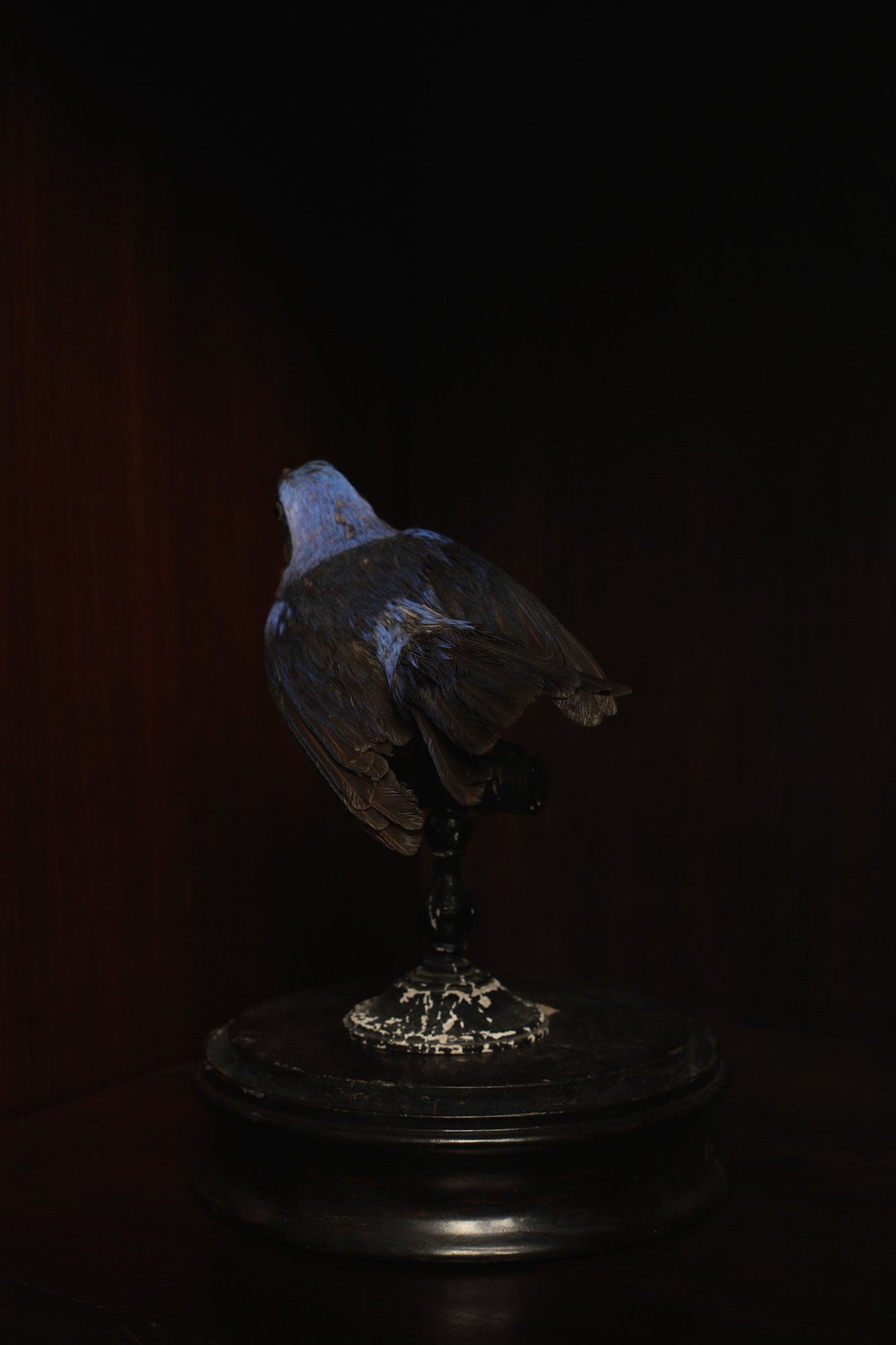 Image 3 of 5
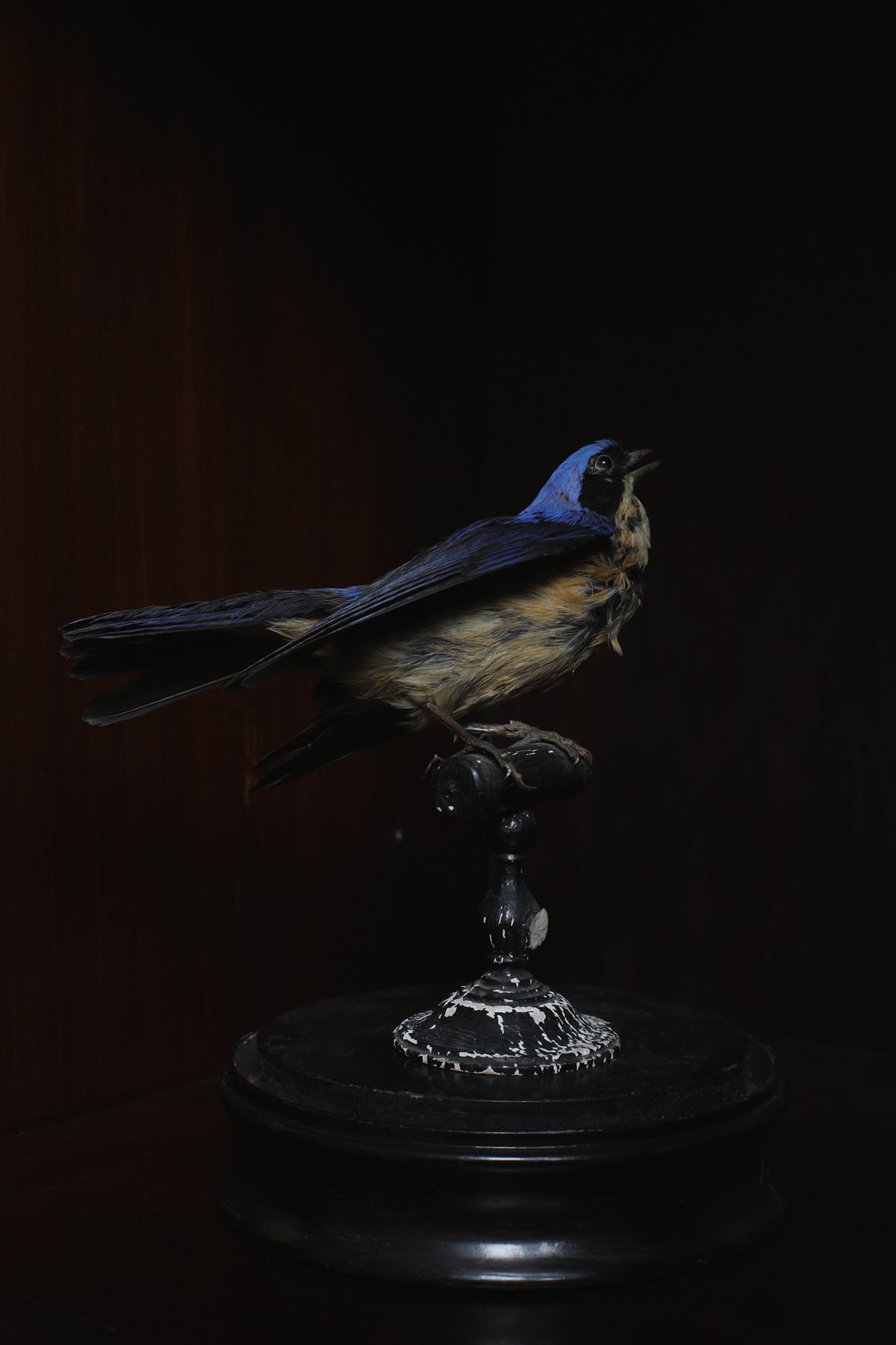 Image 4 of 5
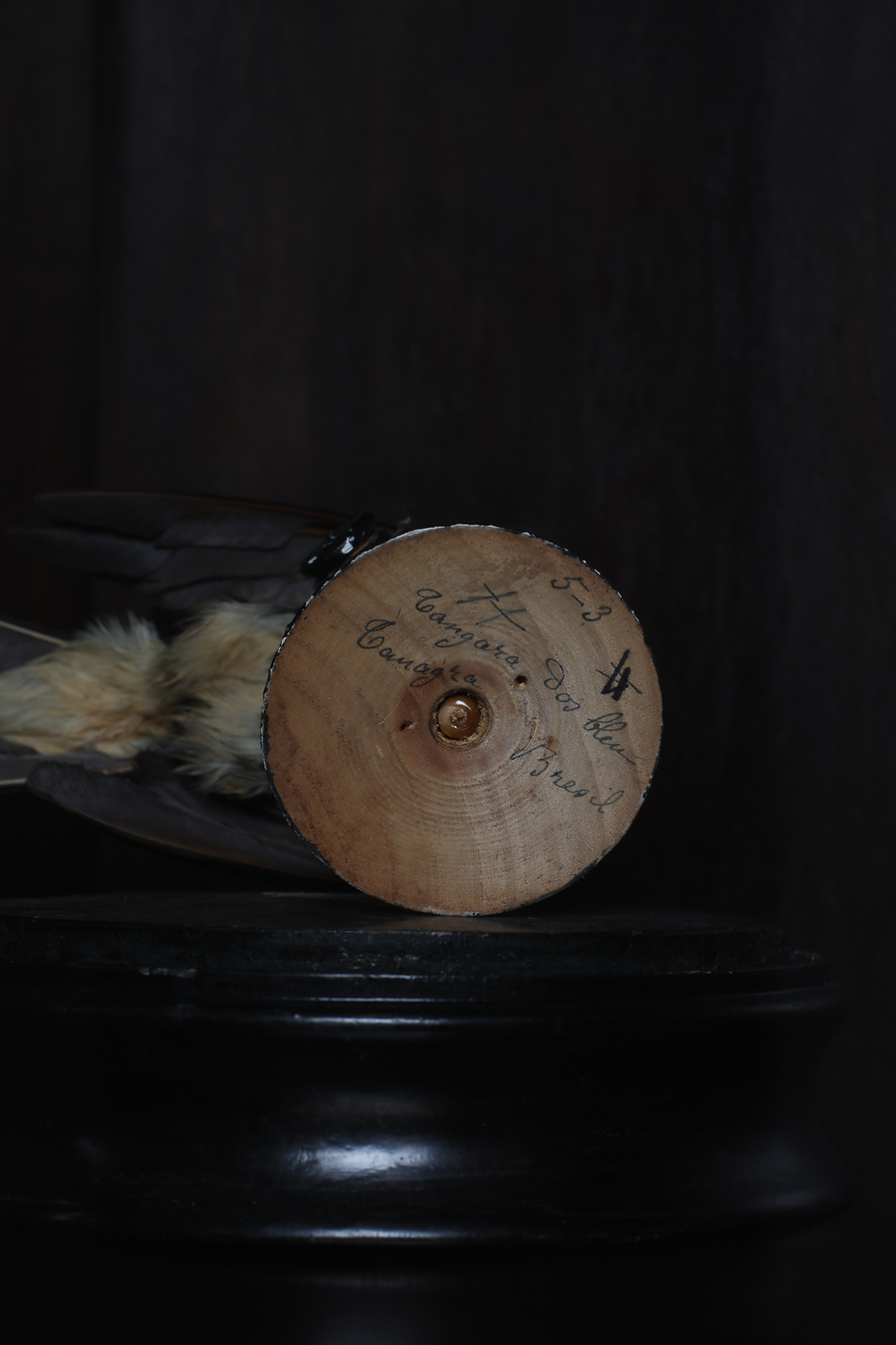 Image 5 of 5
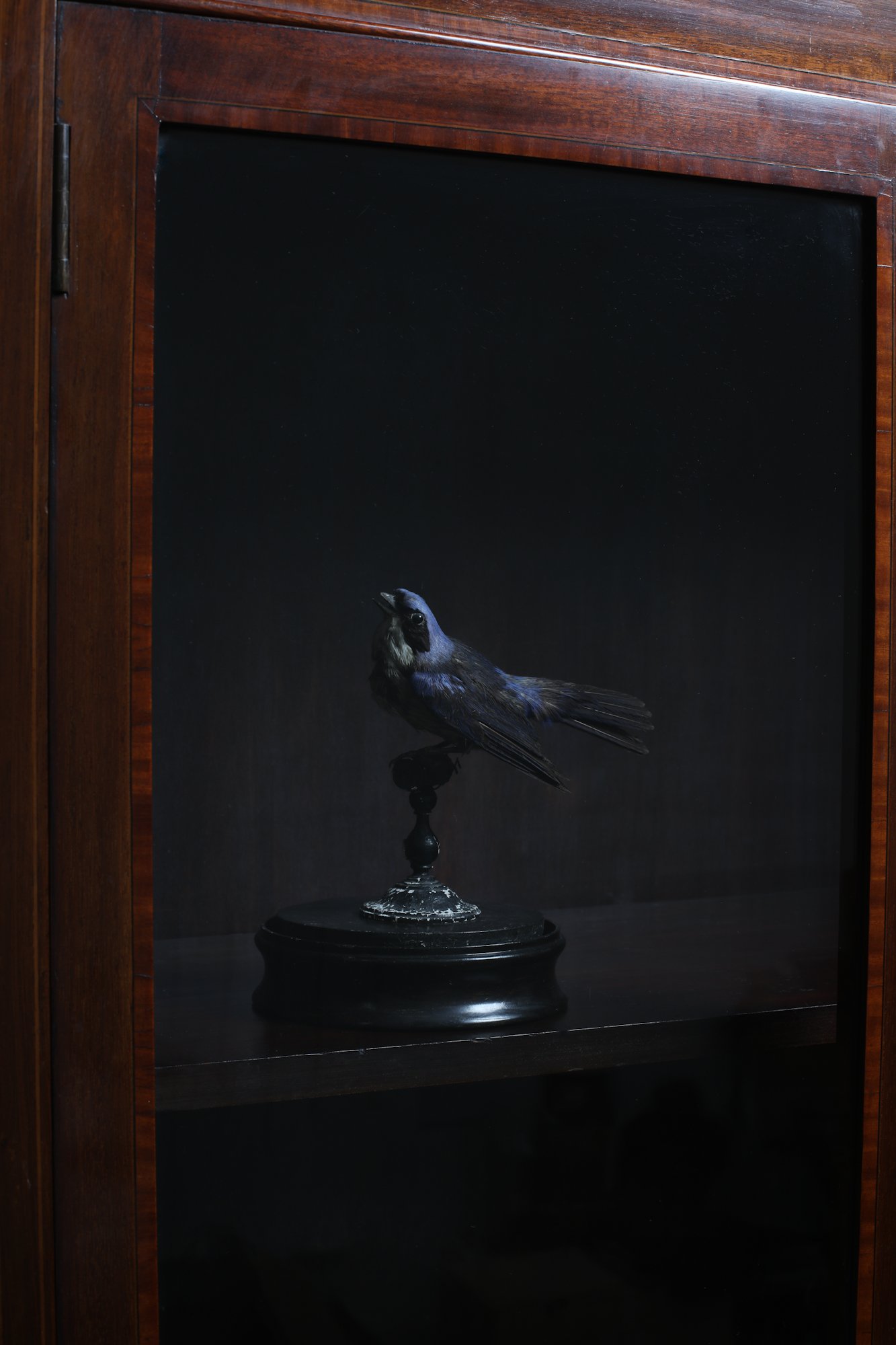
A rare survivor of 19th-century taxidermy natural history, a black-throated blue warbler mounted in France, likely Paris.
While the bottom of the turned wood base has an elegantly handwritten French dip-pen cursive cataloging the songbird as a “Tangara dos Bleu, Bresil”, the bird itself tells a completely different story. It is a North American black-throated blue warbler (Setophaga Caerulescens).
During the 18th-19th centuries, taxidermy specimens were heavily traded across parts of Europe, particularly through Paris and London. Collectors routinely bought birds from South America alongside North American migratory birds. Because these small songbirds look superficially a-like, it was incredibly common for dealers to accidentally swap labels, mix up inventory or assign romanticized sounding titles to appeal to European collectors.
A perfect balance of Victorian ornithology with historical mystery. The songbird would make for an exceptional conversation piece for your cabinet or would assist you as a beautiful desk companion.
This songbird is a victorian mount and displays structural and tonal changes consistent with its grand age. Notably, there is some loss of feather on the birds chest and damage to the delicate toes on both feet - the front left foot features three toes, with one appearing shortened. The right foot has a snapped middle toe that remains attached it is hanging loosely.
Whilst I admire this songbird as an antique historical artifact, my heart belongs to living wildlife. To honour this songbird, 10% of the profits from this sale will be donated directly by me to the RSPB to support modern wild bird conservation, rescue, and habitat restoration.
Shipping & Handling
Due to the delicate and irreplaceable nature of antique ornithological mounts, this songbird will be packed with cushioning, double-boxed and secure against shifting or moisture during transit.
- Signature Required: To ensure secure delivery, a signature will be mandatory upon arrival.
- Unpacking Instructions: Please take extreme care when opening the parcel. Avoid using long or deep razor blades to cut the inner tape, as this can easily add injury to the delicate feathers.
Ethical & Legal statement -
As a modern purveyor of curiosities, I do not support or condone contemporary bird hunting, trapping or modern taxidermy of protected species. This mount is strictly a historical artifact. It is appreciated today exclusively for its historical significance.
In strict accordance with the Wildlife and Countryside Act 1981, this specimen qualifies for the legal “Antique Exemption” as it was mounted and worked prior to 1 June 1947. The authentic, original 19th-century French handwriting on the wooden base serves as a physical provenance of its legal age.
A rare survivor of 19th-century taxidermy natural history, a black-throated blue warbler mounted in France, likely Paris.
While the bottom of the turned wood base has an elegantly handwritten French dip-pen cursive cataloging the songbird as a “Tangara dos Bleu, Bresil”, the bird itself tells a completely different story. It is a North American black-throated blue warbler (Setophaga Caerulescens).
During the 18th-19th centuries, taxidermy specimens were heavily traded across parts of Europe, particularly through Paris and London. Collectors routinely bought birds from South America alongside North American migratory birds. Because these small songbirds look superficially a-like, it was incredibly common for dealers to accidentally swap labels, mix up inventory or assign romanticized sounding titles to appeal to European collectors.
A perfect balance of Victorian ornithology with historical mystery. The songbird would make for an exceptional conversation piece for your cabinet or would assist you as a beautiful desk companion.
This songbird is a victorian mount and displays structural and tonal changes consistent with its grand age. Notably, there is some loss of feather on the birds chest and damage to the delicate toes on both feet - the front left foot features three toes, with one appearing shortened. The right foot has a snapped middle toe that remains attached it is hanging loosely.
Whilst I admire this songbird as an antique historical artifact, my heart belongs to living wildlife. To honour this songbird, 10% of the profits from this sale will be donated directly by me to the RSPB to support modern wild bird conservation, rescue, and habitat restoration.
Shipping & Handling
Due to the delicate and irreplaceable nature of antique ornithological mounts, this songbird will be packed with cushioning, double-boxed and secure against shifting or moisture during transit.
- Signature Required: To ensure secure delivery, a signature will be mandatory upon arrival.
- Unpacking Instructions: Please take extreme care when opening the parcel. Avoid using long or deep razor blades to cut the inner tape, as this can easily add injury to the delicate feathers.
Ethical & Legal statement -
As a modern purveyor of curiosities, I do not support or condone contemporary bird hunting, trapping or modern taxidermy of protected species. This mount is strictly a historical artifact. It is appreciated today exclusively for its historical significance.
In strict accordance with the Wildlife and Countryside Act 1981, this specimen qualifies for the legal “Antique Exemption” as it was mounted and worked prior to 1 June 1947. The authentic, original 19th-century French handwriting on the wooden base serves as a physical provenance of its legal age.